


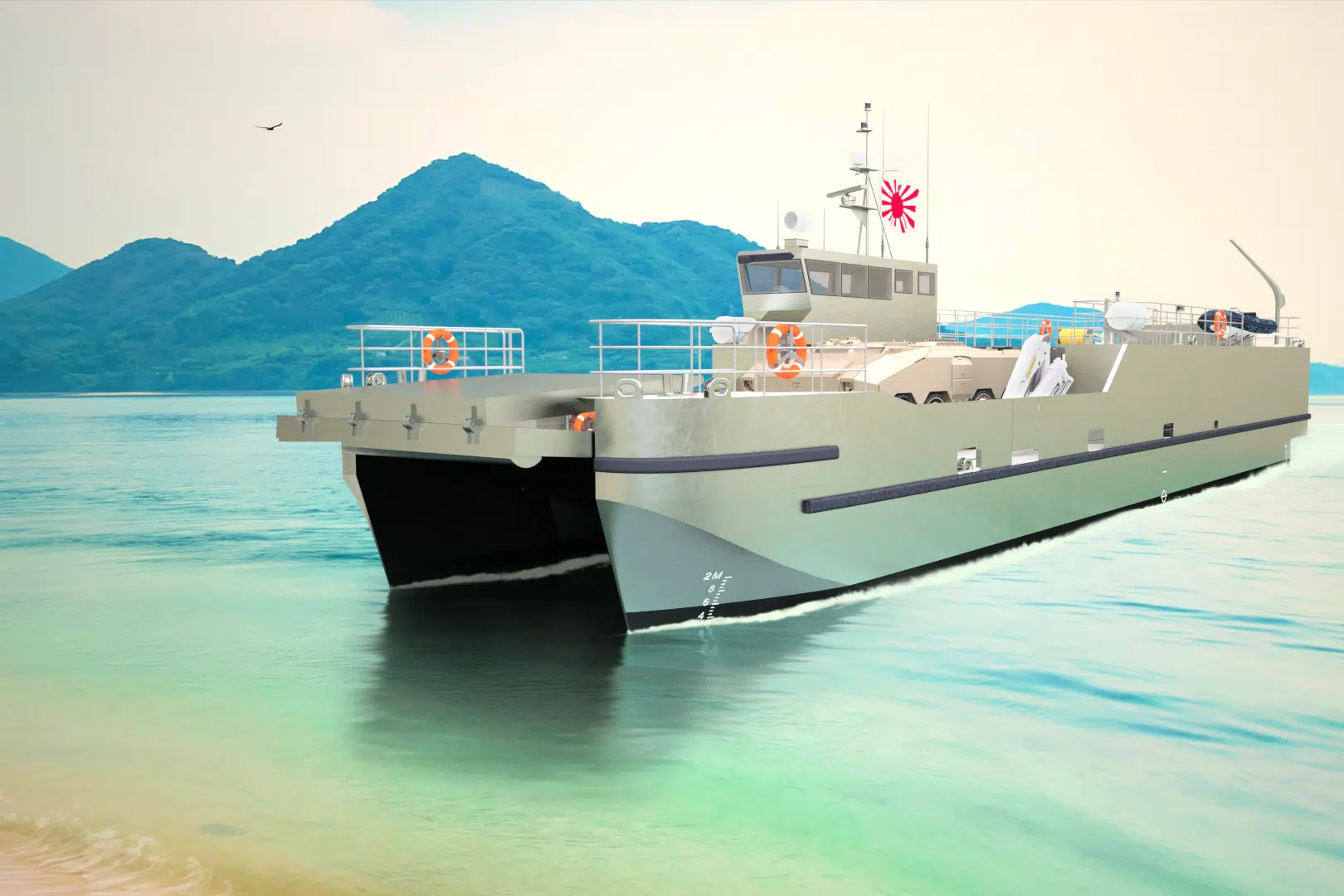
Japan and Vietnam have formally agreed to commence bilateral discussions regarding the potential joint development and co-production of fast landing craft, marking a pivotal milestone in Tokyo’s broader efforts to deepen defense-industrial ties across the Indo-Pacific region. The consensus was reached during high-level talks in Tokyo on July 13 between Japanese Defense Minister Shinjiro Koizumi and Vietnamese Deputy Prime Minister and Minister of National Defence General Phan Van Giang, followed by an official announcement from Japan’s Ministry of Defense on July 15. In a subsequent press conference on July 17, Koizumi confirmed that the proposed platform is intended to rapidly transport military personnel and materiel from offshore transport vessels directly to beachheads, offering superior operational mobility compared to legacy amphibious craft during both combat operations and humanitarian assistance and disaster relief (HADR) missions. While official sources refrained from disclosing specific displacement figures, propulsion types, or technical configurations, the initiative underscores a mutually beneficial alignment aimed at enhancing regional maritime domain awareness and amphibious mobility.

The prospective collaboration reflects Japan’s evolving defense equipment and technology transfer policy, which increasingly emphasizes collaborative ventures with key regional partners to address a deteriorating regional security landscape. Addressing concerns surrounding technology security and potential information leakage given Hanoi’s historic security ties with Beijing, Defense Minister Koizumi emphasized that Tokyo will enforce stringent industrial screening mechanisms, robust information management protocols, and close governmental coordination to protect intellectual property and proprietary corporate technologies. While the political parameters of the initiative have been established, technical specifications remain undisclosed, leaving key operational parameters—such as whether the platform will utilize an air-cushion design, a waterjet-propelled hull, or a specialized multi-hull structure—to be resolved during upcoming working-level negotiations. The Japan Maritime Self-Defense Force (JMSDF) currently operates six Landing Craft Air Cushion (LCAC) platforms embarked on its three Osumi-class amphibious transport docks, relying on U.S.-sourced hulls built by Textron and sustained through the Foreign Military Sales (FMS) framework. However, Tokyo’s domestic industrial base has recently expanded its native high-speed amphibious capabilities through the Acquisition, Technology & Logistics Agency’s (ATLA) Caimen Japan program.

Awarded in February 2025 to Japan Marine United (JMU) in partnership with British naval architecture firm BMT, the program leverages BMT’s tri-bow Caimen design—measuring approximately 30 meters and capable of speeds exceeding 20 knots—with JMU handling detailed production design and domestic shipyard construction. This proven high-speed design represents the most mature Japanese platform currently viable for international technology transfer or joint production adaptation. For Vietnam, participating in a co-development project directly aligns with Hanoi’s defense modernization strategy, which prioritizes the acquisition of advanced maritime capabilities and the expansion of its domestic defense-industrial base through localized production and technology transfer. For Japan, the initiative signifies a strategic transition away from traditional direct exports of finished military hardware toward joint development models with trusted regional security partners. Should negotiations progress beyond initial feasibility assessments, the Caimen Japan baseline could serve as a foundational design, positioning the effort as a potential template for future Japanese defense-industrial engagement and amphibious platform co-production across the Indo-Pacific.


