


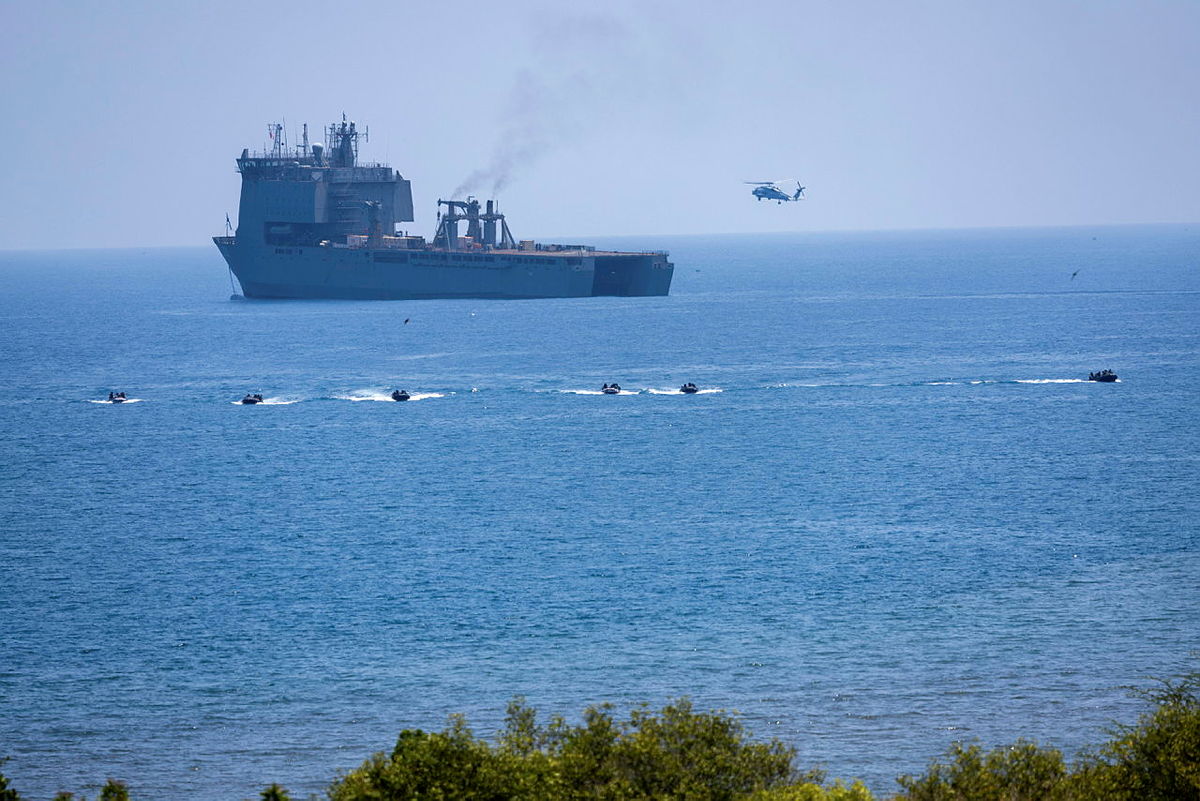
The Australian Defence Force (ADF) and the Indonesian National Armed Forces (Tentara Nasional Indonesia: TNI) have successfully concluded Exercise ‘Keris Woomera 2026’, marking the completion of Canberra’s largest overseas training activity for the year. Held across maritime, land, air, and cyber domains in East Java and the Bali Sea, the nine-day combined joint exercise brought together approximately 1,000 ADF personnel and more than 1,200 TNI troops, including Indonesian Marine Corps units. The biennial exercise, originally established in 2024, focused on complex tactical operations designed to enhance military interoperability, refine joint command structures, and reinforce bilateral responses to regional security challenges across the Indo-Pacific.

Executing a high-tempo operational tempo, the force projection phase centered on amphibious landing operations facilitated by the Australian Amphibious Force aboard the Bay-class landing ship dock HMAS Choules. Operating alongside landing craft and maritime tactical teams, Australian forces worked in tandem with TNI Marine infantry to project combat power from sea to shore. Naval integration featured tactical maneuvers by the Anzac-class frigate HMAS Perth, Supply-class replenishment vessel HMAS Stalwart, and embarked MH-60R Seahawk maritime helicopters, alongside an Indonesian Navy Diponegoro-class (Sigma 9113) corvette operating with AS565 Panther anti-submarine helicopters.

The training serials incorporated significant live-fire artillery engagements and joint air-land integration, marked by notable operational firsts for the ADF. Australian Army M777 155 mm towed howitzers and M142 High Mobility Artillery Rocket Systems (HIMARS)—marking the platform’s inaugural overseas deployment and firing—operated concurrently with TNI 105 mm howitzers and multiple launch rocket systems (MLRS). Air support serials comprised close air support, forward air control, and tactical transport missions flown by Royal Australian Air Force (RAAF) PC-21 turboprop trainers and C-130J Hercules aircraft alongside TNI EMB-314 Super Tucano light attack aircraft and Bell 412 helicopters. The exercise also saw the first deployment of a RAAF No. 4 Squadron aircraft to Southeast Asia since the Second World War.

Beyond traditional force elements, the bilateral activity expanded into specialized domains with the execution of combined defensive cyber operations training, range control management, and medical support integration utilizing Role 2 Forward treatment teams. Highlighting the strategic weight of the bilateral activity, Commander Joint Operations Vice Admiral Justin Jones emphasized that operating side-by-side in a demanding environment directly strengthens force sustainment, deployment readiness, and collective regional stability. The successful execution of Keris Woomera 2026 underscores an evolving defense partnership between Canberra and Jakarta, consolidating practical joint defense capabilities across high-end warfighting spectrums.


