


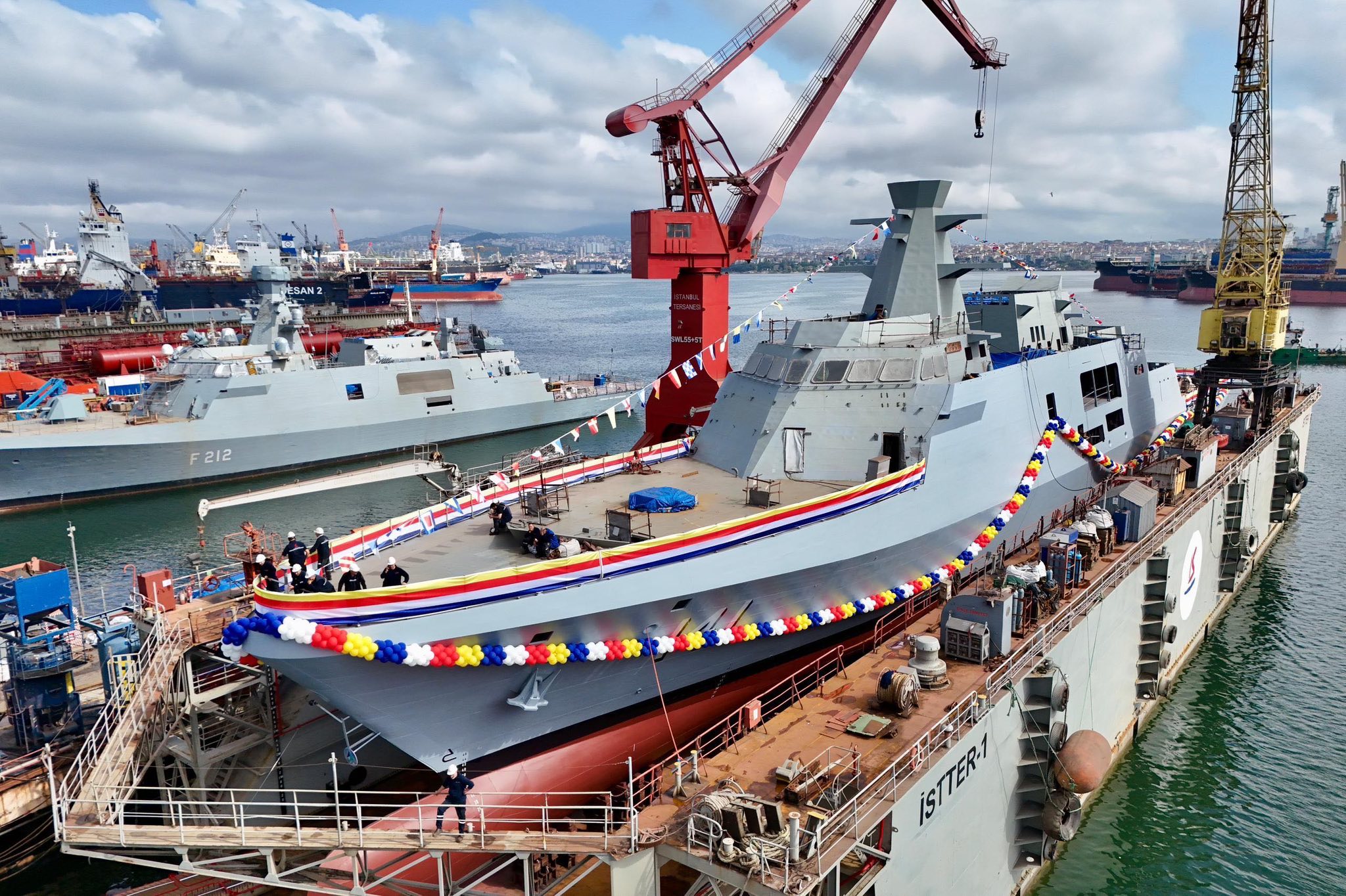
The Royal Malaysian Navy (RMN) has marked a major milestone in its fleet modernization efforts with the naming and launching of its first Batch 2 Littoral Mission Ship (LMSB2) at Istanbul Shipyard, Türkiye. The vessel was officially named Tunku Laksamana Abdul Jalil during a ceremony attended by the Queen of Malaysia, Raja Permaisuri Agong Raja Zarith Sofiah. The ship’s name honors the late Tunku Abdul Jalil, the fourth son of the current Malaysian King and Queen, whose battle with cancer inspired the national “Fight Like Jalil” ethos—a spirit the RMN noted aligns with its own operational doctrine. This procurement represents a critical evolutionary step for the RMN under its restructured 15-to-5 Fleet Transformation Program, which aims to consolidate the service’s legacy fleet into fewer, more capable hull classes. The LMSB2 program serves as a direct continuation of the Littoral Mission Ship Batch 1 (LMSB1) initiative, which saw the introduction of the China-built Keris-class littoral mission ships. However, due to the limited size and austere armament of those initial Chinese hulls, the RMN shifted its requirements for the second batch toward a much heavier, more survivable platform capable of performing true three-dimensional warfare.
Kuala Lumpur selected Savunma Teknolojileri Mühendislik (STM) to supply a three-ship corvette class based on the Turkish Navy’s proven Ada-class (MILGEM) design. The selection concluded a competitive international bidding process where the Turkish design won out over alternative proposals, including the HDC 2000 from HD Hyundai Heavy Industries, the FCX from Fincantieri, the Sigma design from Damen Group, and the C92 from Dearsan. The program also marks a geopolitical milestone as the first formal Government-to-Government defense contract between Malaysia and Türkiye for naval combatants, establishing a foundation for long-term technology sharing and defense industrial cooperation. The future Tunku Laksamana Abdul Jalil measures 99.56 meters in length, with a beam of 14.40 meters and a draft of 3.90 meters. Displacing 2,400 tonnes, the corvette is powered by a RENK Combined Diesel and Gas (CODAG) propulsion system consisting of one gas turbine and two diesel engines driving two shafts. This configuration delivers a main installed power of 31,640 kW alongside four auxiliary engines, allowing the ship to achieve a maximum speed of 30 knots and an economical cruising speed of 15 knots.

The platform possesses an operational range of 3,500 nautical miles at cruising speed, maintaining an endurance of 21 days with logistical support or 10 days autonomously while carrying a complement of 93 personnel, including aviation officers, with accommodations for up to 106. For localized deployment, the hull carries two rigid-hulled inflatable boats. The ship’s sensors and systems architecture are highly integrated for complex littoral environments, coordinated by the G-MSYS (GENESIS MİLGEM Savaş Yönetim Sistemi) combat management system and a UniMACS 3000 integrated platform management system. Primary air and surface surveillance is handled by the Aselsan CENK-S Active Electronically Scanned Array radar, complemented by an ALPER Low Probability of Intercept navigation radar, an X-band radar, a fire control radar, and the STING EO Mk2 weapon control system. The electronic warfare and defensive suite features the ARES-2N SIGINT system, laser and radio frequency warning systems, anti-submarine warfare jammers, and a surface vessel torpedo defense system. Communications are maintained via SatCom, Link 11 and Link 16 data links, alongside advanced digital navigation networks.
Representing a significant leap in lethality over the RMN’s older patrol vessels, the LMSB2 is heavily armed to project power against modern surface and air threats. The primary gun armament comprises a forward-mounted 76 mm OTO Melara Super Rapid gun and a single secondary 30 mm Aselsan SMASH remote weapon station. For air defense, the vessel is equipped with a vertical launch system housing 16 K-SAAM (Korean Surface-to-Air Missiles), while surface-strike capability is provided by eight Atmaca anti-ship cruise missiles. For aviation operations, the corvette features a flight deck and hangar capable of supporting a medium-lift helicopter or an unmanned aerial vehicle, complete with storage for 20 tons of JP-5 aircraft fuel, Helicopter In-Flight Refueling capabilities, and dedicated maintenance systems. According to RMN timelines, the Tunku Laksamana Abdul Jalil and the subsequent two sister corvettes are scheduled to be fully delivered and operational within the Malaysian fleet by the end of 2027.


