


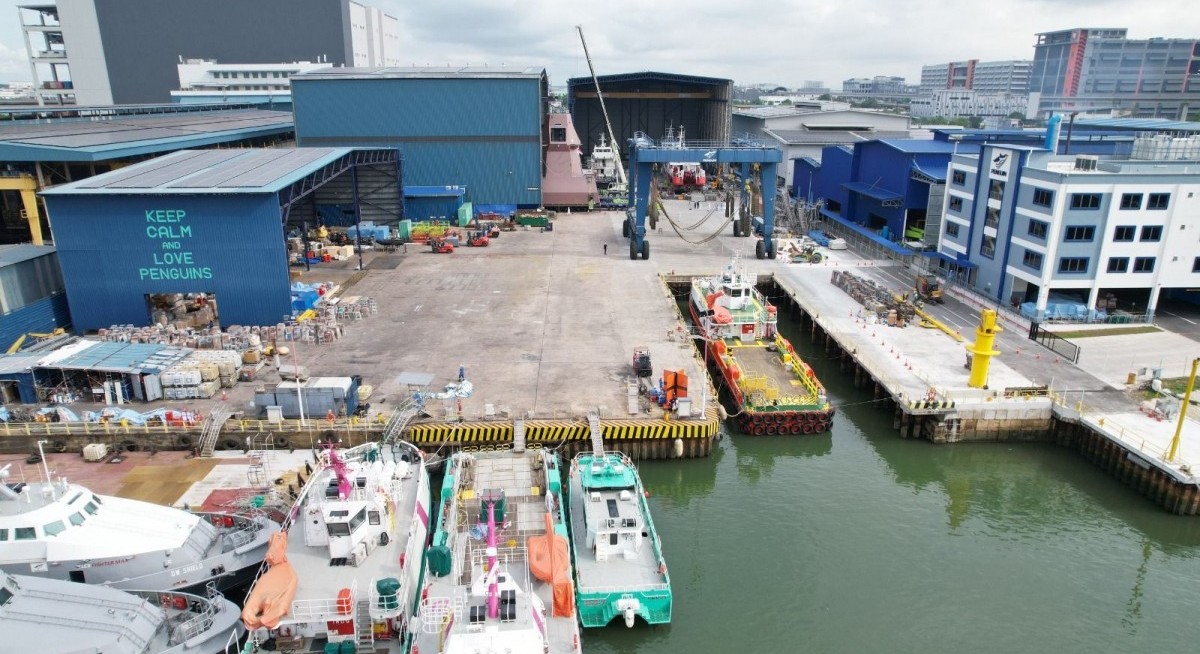
The Ministry of Defence of Singapore has awarded Singapore-based shipbuilder Penguin International Limited a turnkey contract for the design, engineering, and construction of two landing craft for the Republic of Singapore Navy (RSN). Marking the company’s inaugural naval shipbuilding program as a prime contractor, the procurement will be executed entirely in-country utilizing Penguin’s in-house engineering, production, and project management assets centered at its flagship Tuas shipyard. The award follows Penguin’s recent milestone delivery of the first of six large carbon-fiber composite superstructures destined for the RSN’s flagship Multi-Role Combat Vessel (MRCV) program, underscoring the shipbuilder’s expanding structural role within Singapore’s sovereign naval defense ecosystem.
Established in 1976 and publicly listed in Singapore, Penguin International Limited has built five decades of operational and industrial expertise spanning aluminum high-speed craft design, vessel construction, operations, complex systems integration, and full lifecycle maintenance. As the world’s largest builder of IMO-registered aluminum commercial vessels according to S&P Global Sea-Web, the company has delivered nearly 400 vessels across commercial and defense sectors in more than 20 countries from its shipyard facilities located in Singapore and Batam, Indonesia. Its commercial and security portfolio includes over 200 proprietary-designed, build-for-stock (BFS) FLEX-40 and FLEX-42 series crewboats, as well as specialized FLEX FIGHTER security craft, operating alongside its owned fleet of crewboats, security vessels, workboats, and passenger ferries for global charterers.
The RSN landing craft contract signifies a critical strategic transition for the Singaporean shipbuilder, enabling Penguin to leverage its mature commercial high-speed aluminum production methodology into the defense domain as an independent prime contractor. Corporate leadership characterized the Ministry of Defence contract award as a major vote of confidence in the organization’s domestic engineering prowess, project execution capabilities, and technical maturity. By transitioning from secondary composite component fabrication to full turnkey naval platform delivery, Penguin expands Singapore’s sovereign maritime defense capacity while positioning its homegrown capabilities to support long-term regional security operational requirements.
Looking ahead, the execution of the landing craft program is projected to reinforce Penguin’s competitive positioning for future naval and defense surface platform solicitations across Southeast Asia. The integration of prime contract management, turnkey engineering, and localized composite structural manufacturing creates a versatile industrial template for middle-tier naval shipbuilders competing for regional littoral and utility craft requirements. As the RSN continues its fleet renewal initiatives, Penguin’s domestic industrial footprint in Tuas represents an essential localized asset for sustainment, engineering upgrades, and future defense platform delivery within Singapore’s broader maritime strategy.


