


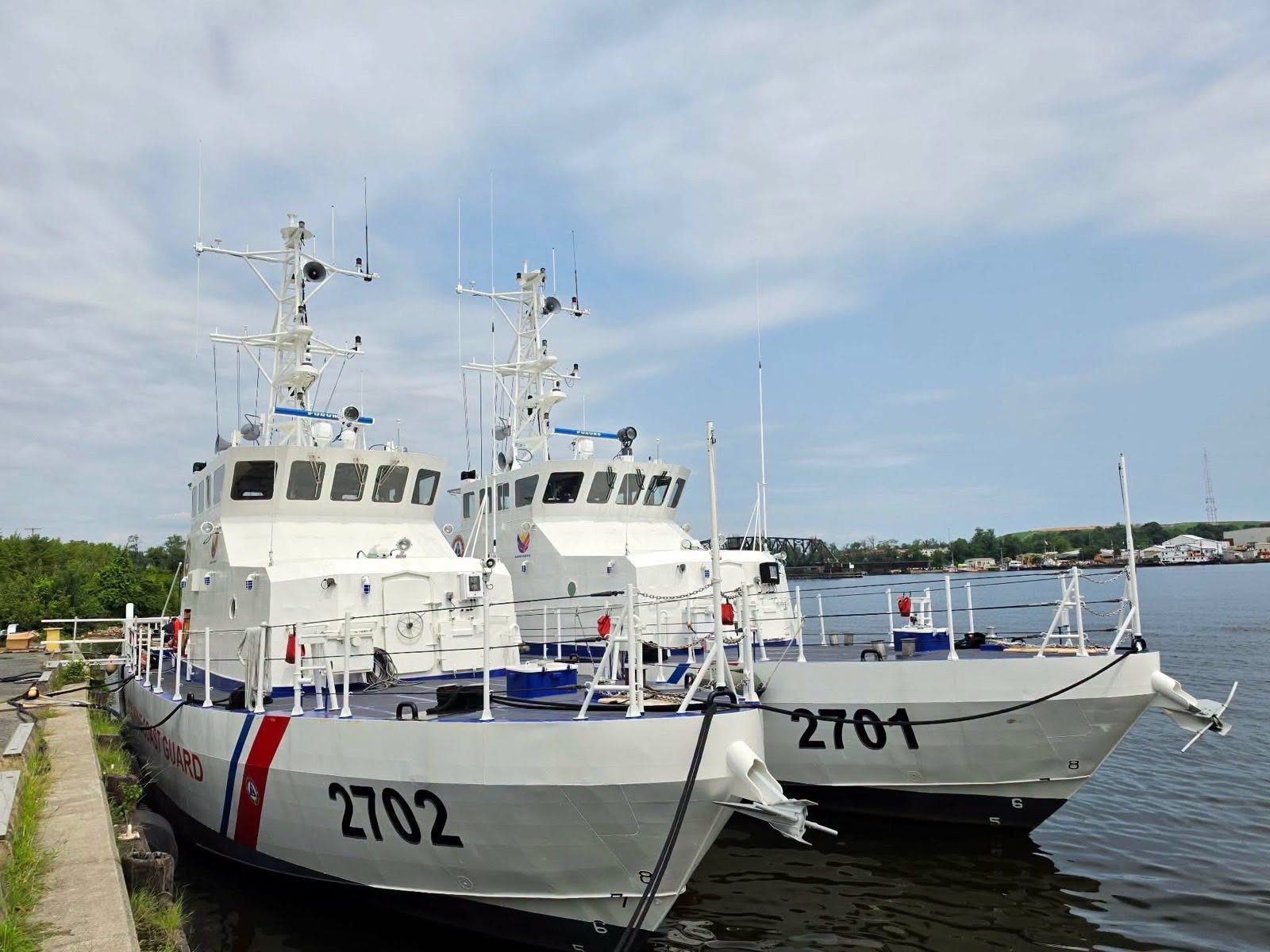
The Philippine Coast Guard (PCG) is set to bolster its maritime operational capacity following the upcoming transfer of two 27-meter Marine Protector-class patrol vessels from the United States. Expected to arrive in Manila waters in October 2026, the vessels will be commissioned into service as BRP Pag-asa (PATS-2701) and BRP Patag (PATS-2702). The acquisition stems from a pledge made during President Ferdinand Marcos Jr.’s visit to Washington, D.C., in May 2023, where the U.S. government committed to supplying the Philippines with patrol craft and airlift assets to enhance regional maritime domain awareness and search and rescue capabilities.
Ahead of the deployment, a detachment of 24 PCG personnel completed comprehensive operational and maintenance training in Baltimore, Maryland, culminating in a graduation ceremony on August 20, 2026. Official statements from PCG Spokesperson Commodore Noemie Cayabyab highlighted that the newly acquired platforms will support the service’s Organized National Engagement (ONE) at Sea strategic concept and the Intensified Community Assistance, Awareness, Response, and Enforcement (iCARE) campaign. The integration of these cutters aims to elevate operational efficiency across the nation’s exclusive economic zone, particularly in executing maritime safety operations, enforcing fisheries regulations, and managing marine environmental hazards such as oil spills.

Designed by the Netherlands-based Damen Group under the Stan 2600 design and constructed by Louisiana-based Bollinger Shipyards, the Marine Protector class features an 87-foot steel hull and aluminum superstructure optimized for coastal interdiction. The multi-mission platforms are powered by diesel engines capable of reaching maximum speeds of 26 knots, with a fuel consumption rate of approximately 165 gallons per hour at full throttle. Built to support sustained deployments with mixed-gender crews, the craft accommodate standard complements of 10 to 12 personnel across five separate berthing spaces.
A key operational feature of the Marine Protector class is its integrated stern launch and recovery ramp, which allows for the rapid deployment of a rigid-hull inflatable boat (RHIB) while the main vessel is underway. This system requires only a single deck operator to launch boarding parties or rescue teams, significantly increasing response efficiency during underway interdictions and maritime law enforcement tasks. The transfer reflects ongoing defense cooperation between Manila and Washington, aimed at maintaining maritime security and a stable operational posture across the Indo-Pacific region.


