


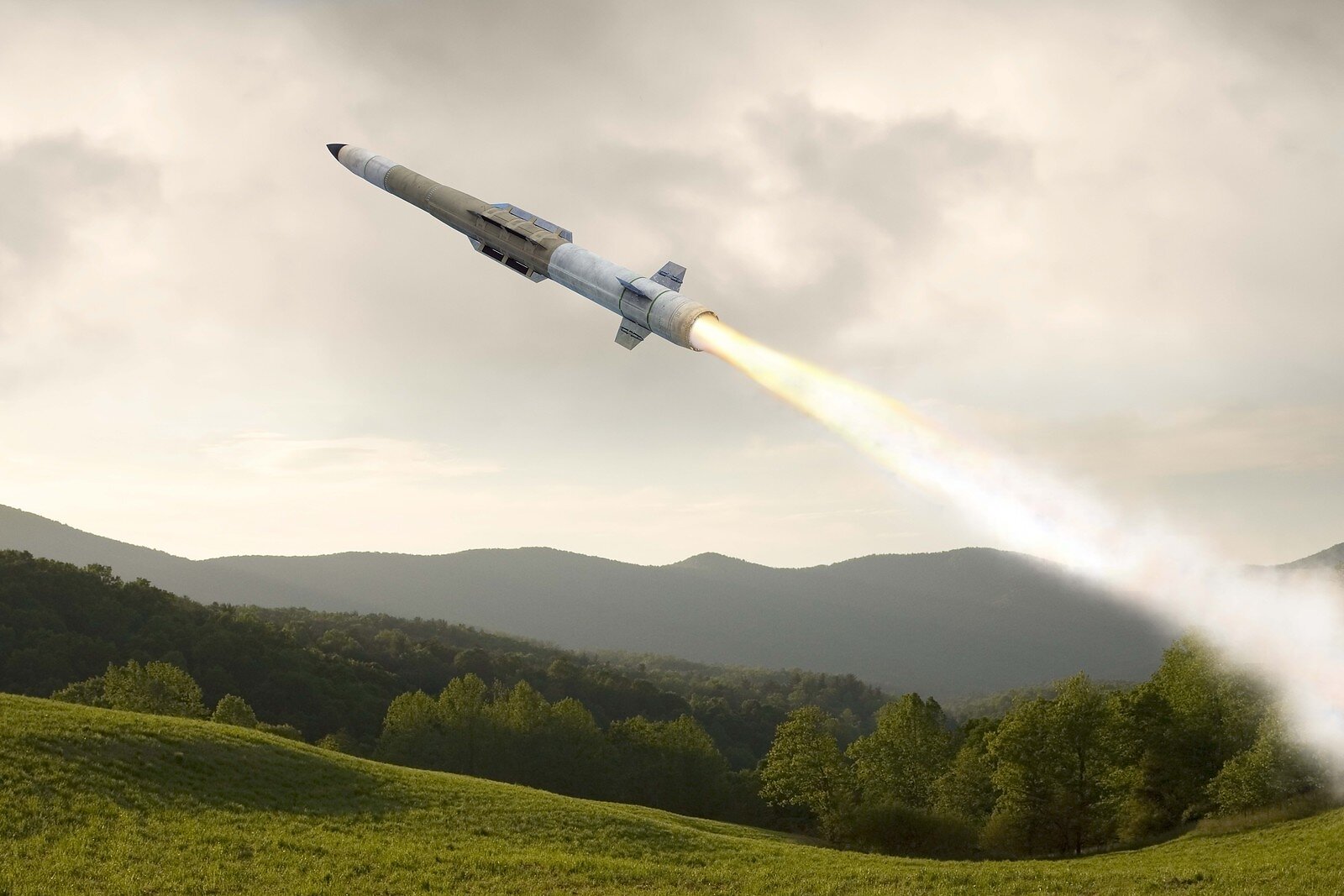
Lockheed Martin welcomes the commitment of the United States, Germany, the Netherlands, Poland and Sweden to explore a dedicated PAC-3® Missile Maintenance Facility in Europe. The joint government-to-government agreement was signed today during the NATO Summit Defense Industry Forum, part of the 2026 NATO Summit in Ankara. The proposed facility will strengthen NATO’s integrated air and missile defense readiness by providing in-region maintenance and sustainment capabilities that help keep PAC-3 missiles ready, reliable and rapidly deployable against evolving threats. The proposed PAC-3 Missile Maintenance Facility will support the growing community of NATO allies operating PAC-3 Missile Segment Enhancement (MSE) interceptors and PAC-3 Cost Reduction Initiative (CRI) interceptors. The PAC-3 missile family is the fourth upgrade to the MIM-104 missile series for the Patriot system.
Industrial cooperation strengthens the transatlantic defense industrial base and contributes to economic progress and shared security,” said Jay Pitman, president, Lockheed Martin International. For more than 75 years, Lockheed Martin has demonstrated our commitment to being a strategic partner for the defense and security of Europe. Today, we are accelerating our work with NATO allies and industry partners to expand integrated air and missile defense capacity, strengthen regional sustainment networks and support the rising global demand for these capabilities.”
Lockheed Martin will contribute decades of experience in missile production, sustainment, engineering and supply-chain management to support the development of the proposed facility and the allied nations that depend on PAC-3 capabilities. Demand for PAC-3 continues to grow worldwide, driven by its combat-proven performance. In January, a landmark framework agreement was established with the U.S. Department of War to triple production capacity for PAC-3 MSE. In April, the U.S. government awarded Lockheed Martin a $4.7 billion contract to continue accelerating PAC-3 MSE production this year, ensuring U.S. allies have the advanced air and missile defense capabilities they need to defend what matters most.
The PAC-3 is designed to intercept tactical, short- and medium-range ballistic missiles, cruise missiles, and air-breathing threats. It intercepts ballistic missiles in their terminal phase of flight. It’s designed to be an integral weapon in a layered air defense network to protect tactical and operational support areas at semi-fixed locations. This update to the PAC missile series provides a small, agile, kinetic hit-to-kill interceptor, providing many advantages over previous models. The PAC-3 is about a quarter of the size of its PAC-2 predecessor, allowing four missiles to be fit in each canister as opposed to one. This effectively quadruples the ability of the Patriot system to cover an area. The PAC-3 also possesses higher maneuverability from 180 miniature pulse solid propellant rocket motors mounted in the forebody of the missile. These motors perform fine alignment of the interceptor to achieve hit-to-kill.


