


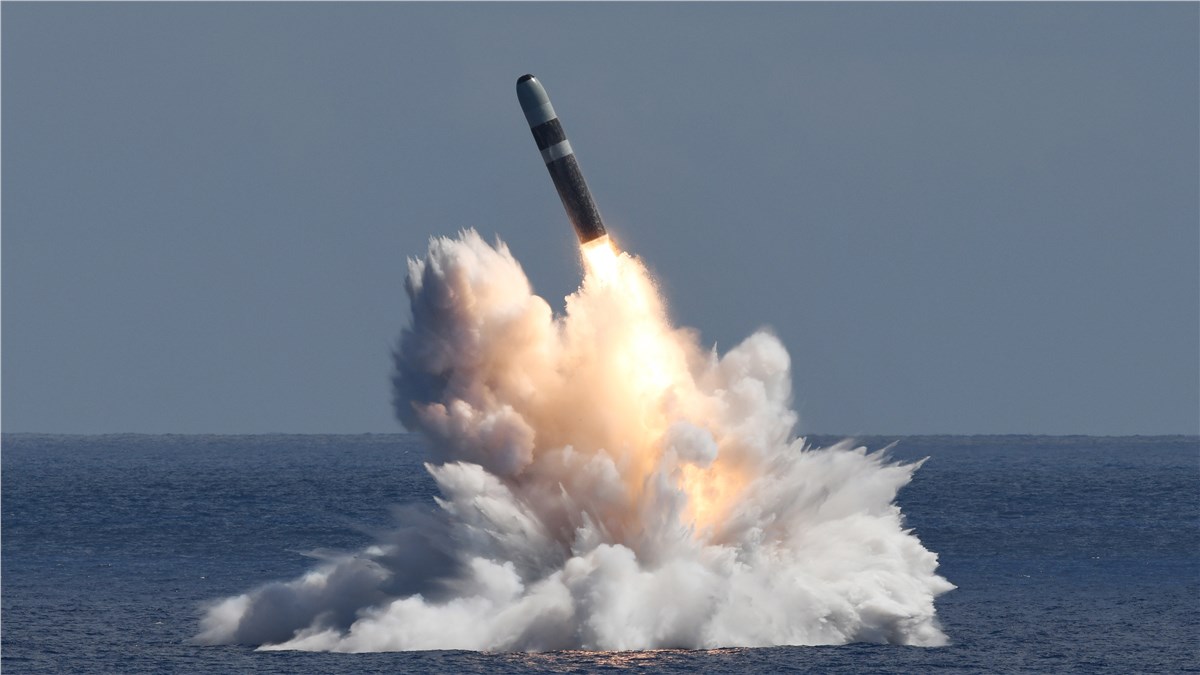
Lockheed Martin (NYSE: LMT) has been awarded an $850 million contract modification from the U.S. Navy to continue design and development of the Trident II D5 Life Extension 2 (D5LE2) program – a critical piece of the nation’s nuclear triad. The U.S. Department of War announced the award in April. To support this critical work, Lockheed Martin is expanding its workforce across multiple locations and actively recruiting engineers, technicians and other professionals who are passionate about national security and innovation. Opportunities are available for those seeking to contribute to a mission with a global impact. Work will be performed in Colorado, Florida, Utah, Washington, Georgia and the National Capital Region. Through continued investment in programs like D5LE2, Lockheed Martin is advancing technologies that strengthen deterrence and support the warfighter in an evolving threat environment.
“Lockheed Martin is fully committed to the mission as we move forward into this next phase,” said Eric Scherff, vice president of Lockheed Martin’s Fleet Ballistic Missile (FBM) Program. “This award marks another important step along the way as we continue delivering a credible and resilient deterrent for the American forces and allies.”
The UGM-133A Trident II, or Trident D5 is a submarine-launched ballistic missile (SLBM), built by Lockheed Martin Space in Sunnyvale, California, and deployed with the United States Navy and Royal Navy. The Trident II D5 strategic weapon system remains a cornerstone of U.S. deterrence, recognized for its accuracy, reliability and operational performance. Originally developed in the 1980s and modernized through a life extension effort completed in 2017, the system is being further advanced to ensure its effectiveness into the 2040s and beyond. Submarine-launched ballistic missiles are the sea-based leg of the nation’s nuclear triad, alongside intercontinental ballistic missiles and nuclear-capable bombers. Representing approximately 70 percent of deployed strategic deterrent capability, the sea-based leg provides unmatched survivability, persistent presence and operational flexibility.
With greater accuracy, payload, and range than the earlier Trident C-4, it is a key element of US and UK strategic deterrence, and complements the US strategic nuclear triad of land-based LGM-30 Minuteman intercontinental ballistic missiles and air-based bombs and AGM-86B missiles. The Trident II is considered to be a durable sea-based system capable of engaging many targets. It has payload flexibility that can accommodate various treaty requirements, such as New START. The Trident II’s increased payload allows nuclear deterrence to be accomplished with fewer submarines, and its high accuracy—approaching that of land-based missiles—enables it to be used as a first strike weapon. Trident II missiles are carried by 14 US Ohio and 4 British Vanguard-class submarines, with 20 missiles on each Ohio class and 16 missiles on each Vanguard class (the number of missiles on Ohio-class submarines was reduced from 24 to 20 by 2017,


