


The Philippines may gain access to a wider portfolio of Japanese military platforms following Tokyo’s decision to relax restrictions under its revised Three Principles on Transfer of Defense Equipment and Technology, potentially opening the door for the transfer of surplus aircraft, naval vessels, and land systems to Manila. Recent statements by Philippine Department of National Defense (DND) Secretary Gilberto Teodoro Jr. indicate that Manila is preparing to leverage Japan’s revised defence export policy to strengthen the Armed Forces of the Philippines’ (AFP) modernization programme. Teodoro said the changes would allow the Philippines to procure high-quality and highly supportable defence articles, enhancing both national resilience and regional deterrence. Among the platforms that could become available under the revised framework are retired or surplus Japanese systems suited to the Philippines’ maritime security and territorial defence requirements. These may include the Kawasaki P-3C Orion maritime patrol aircraft, a long-range anti-submarine warfare and maritime surveillance platform capable of significantly improving the AFP’s maritime domain awareness in the South China Sea and surrounding waters.

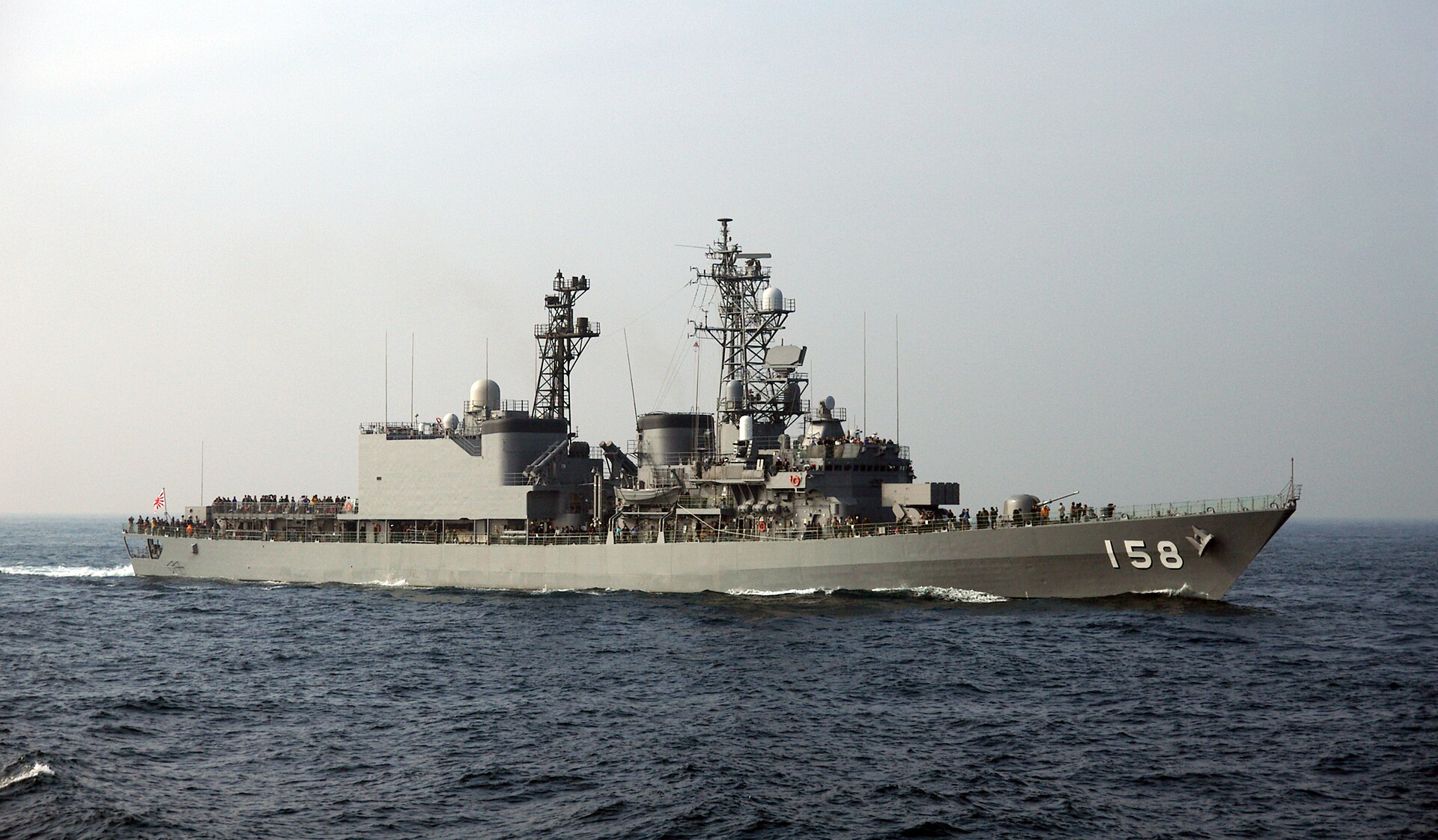
Japan could also potentially transfer former Japan Maritime Self-Defense Force (JMSDF) surface combatants such as the Abukuma-class destroyer escort and the Asagiri-class destroyer. Both classes would provide the Philippine Navy with improved anti-submarine warfare, surface warfare, and patrol capabilities, while helping to address the service’s current shortage of larger multi-mission warships. In the air mobility segment, the Beechcraft C-90 King Air or similar utility aircraft could be considered for transport, liaison, surveillance, or medical evacuation roles. Such aircraft would complement the Philippine military’s growing requirement for flexible, light fixed-wing platforms for inter-island operations. On land, Japan’s revised export policy could theoretically permit the transfer of decommissioned ground systems such as the Type 74 main battle tank and Type 96 armoured personnel carrier (APC). While the Philippines has traditionally focused less on heavy armour, such platforms could support mechanized operations or provide additional firepower and troop mobility for the Philippine Army and Marine Corps.

Japan’s revised export rules, approved by the Cabinet and National Security Council, replace the previous limitation of defence exports to five non-combat categories—rescue, transport, warning, surveillance, and minesweeping—with a new classification system separating “weapons” and “non-weapons” based on lethal capability. Although the new framework still generally prohibits exports to countries engaged in active conflict, exceptions may be granted under what Tokyo terms “special circumstances” linked to Japan’s national security interests and regional strategic objectives. For Manila, the potential acquisition of Japanese-made or ex-Japan Self-Defense Force equipment could represent a cost-effective and rapid capability boost, particularly in maritime patrol, anti-submarine warfare, and coastal defence missions. It would also deepen defence-industrial and strategic co-operation between the Philippines and Japan as both countries respond to evolving security challenges in the Indo-Pacific region.


