


In contemporary rotary-wing operations, crews are increasingly tasked with prosecuting time-sensitive targets under compressed timelines. Mixed strike packages often comprise multiple airframes equipped with disparate sensor suites, legacy avionics, and varying communications architectures. Aircrews must simultaneously manage full-motion video feeds, geospatial data overlays, weapons status, datalink traffic, and voice communications. The cumulative burden of switching between systems and reconciling fragmented data streams can degrade situational awareness and delay engagement timelines, allowing targets greater opportunity to evade. This operational challenge underscores a broader issue within rotary strike environments: mission effectiveness is constrained not only by platform capabilities, but also by the integration of onboard systems. While advancements in sensors and weapons have improved lethality, the lack of unified mission management software continues to impose significant cognitive and procedural burdens on operators.
L3Harris Technologies has developed the Widow® mission management software to address these integration gaps. The system is designed as a scalable, open-architecture solution capable of consolidating intelligence, surveillance, and reconnaissance (ISR), strike coordination, maneuver elements, and multi-domain data into a single, unified operating environment. Importantly, the software integrates with existing avionics, minimizing the need for costly hardware replacement or retraining. Widow enables seamless integration of onboard sensors, weapons interfaces, and tactical datalinks, including Link 16, alongside communications systems. By fusing these inputs into a coherent common operating picture, the software reduces the need for manual data correlation. This approach enhances mission tempo and allows crews to maintain focus on tactical execution rather than system management.

Within the cockpit, Widow provides up to eight configurable display windows per crew station. These can present a combination of live sensor feeds, augmented reality overlays, digital moving maps, and target designation tools within a single interface. This configuration reduces operator cognitive load and shortens decision-making cycles, enabling aircrews to remain mission-focused during high-intensity engagements. The software also supports both onboard and offboard collaboration modes, extending the shared operational picture across multiple aircraft within a strike package. In multi-ship formations, this ensures that all crews operate from a synchronized situational awareness baseline. As a result, target identification and engagement can be executed with greater coordination and reduced latency across the formation.
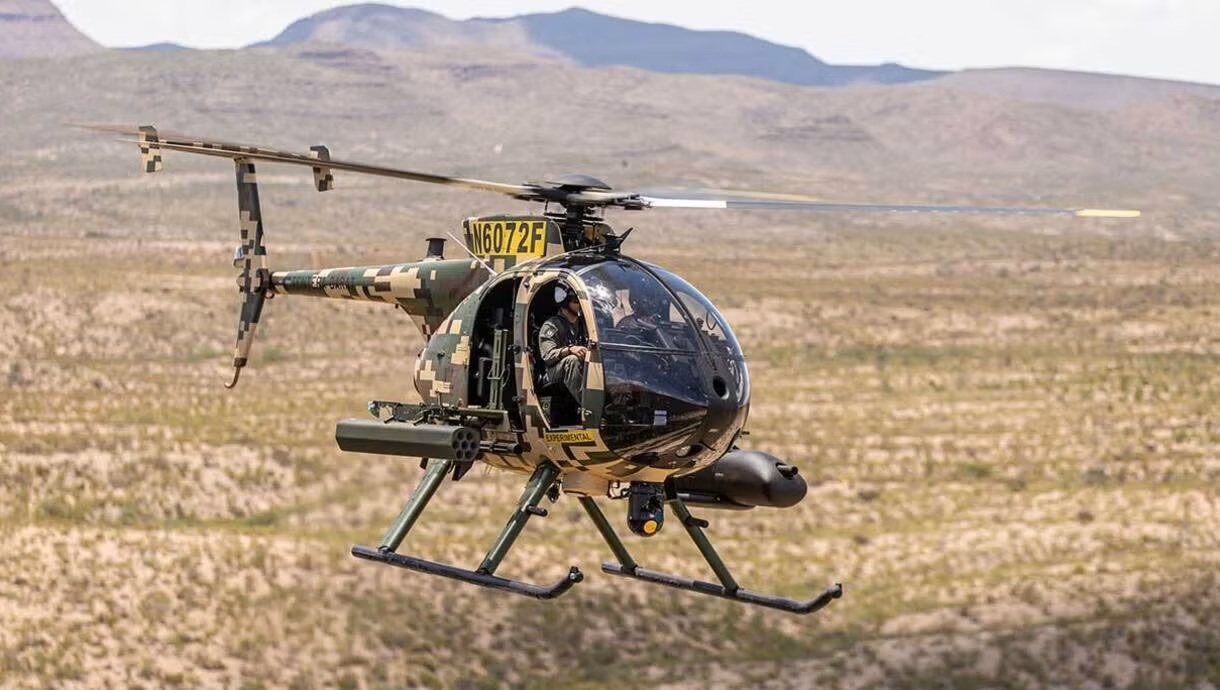
Widow is not a developmental concept but a mature capability, underpinned by approximately 18 years of mission system integration experience. The software has accumulated over 1.3 million flight hours across a range of ISR and rotary strike platforms, including the MD-530G, Bell 407, HH-60U, and S-61 Sea King. This operational pedigree supports its applicability across both light attack and utility helicopter fleets. A key feature of the Widow system is its open software development kit (SDK) and modular application programming interfaces (APIs). These enable rapid integration of new capabilities as mission requirements evolve, without disrupting established operator workflows. This approach aligns with broader defense trends toward modular, upgradeable software-defined mission systems. By addressing the fragmentation of onboard systems and reducing cognitive workload, L3Harris’ Widow mission management software represents a significant step toward improving rotary-wing strike effectiveness. Its emphasis on data fusion, interoperability, and scalability positions it as a critical enabler for modern multi-domain operations, where speed of decision and unity of information are decisive factors.


