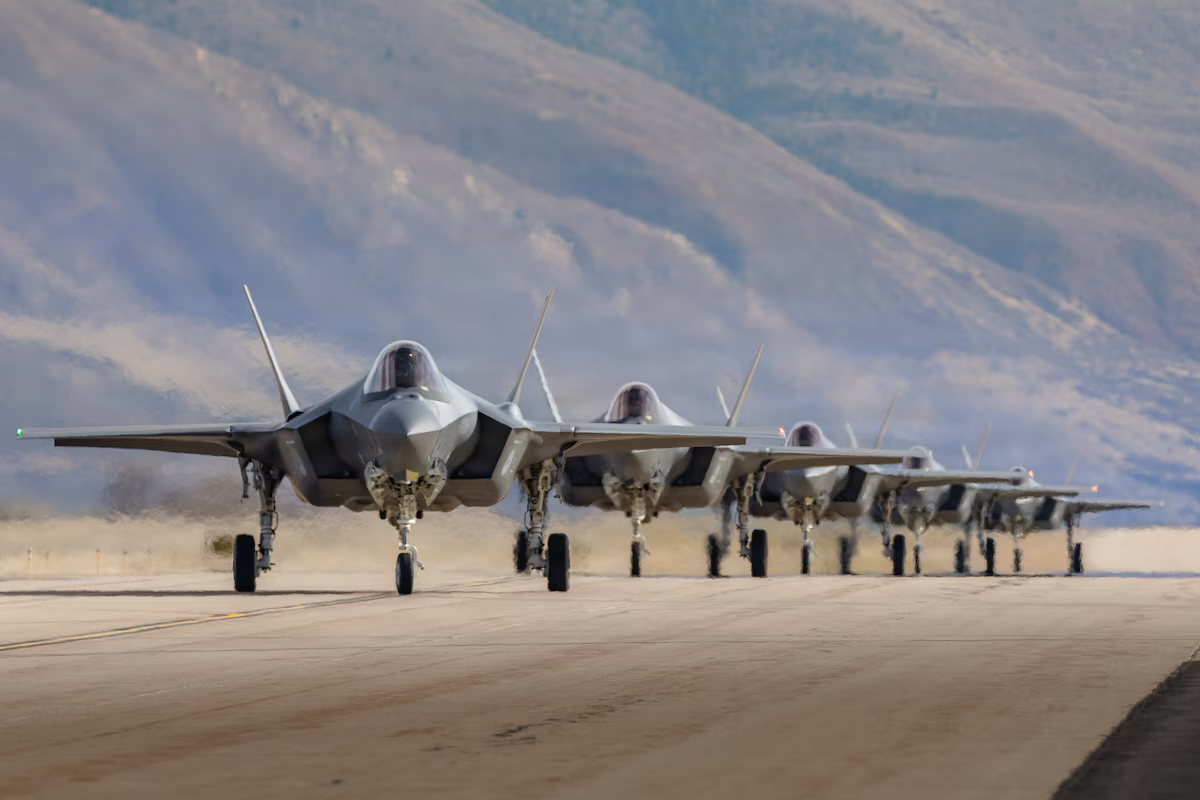
For much of March, a contingent of Dutch F-35A Lightning IIs, along with support personnel from across the RNLASF Air Combat Command, have been deployed to Hill Air Force Base for exercise Lightning Forge – flying and training alongside their U.S. Air Force F-35 counterparts from the 388th Fighter Wing. The primary goal is to sharpen combat skills in a realistic, contested environment, with a focus on integration between the NATO allies. For the Royal Netherlands Air, the vast, rugged expanse of the Utah Test and Training Range offers a stark contrast to their “pancake-flat” homeland, said Lt. Col. “Swinger,” commander of 313 Squadron. Both the 388th Fighter Wing and the Dutch squadron are considered “front-runner” units within their respective air forces, often at the leading edge of combat operations. The exercise marks the largest-ever F-35 deployment by the RNLASF, and they aren’t holding back. They’re generating two lines of sorties every day, loading live and inert weapons, for the entire month. They’re doing so with a minimum amount of aircraft, putting their maintainers and their aircraft to the test. The high operational tempo is designed to be a true challenge for the entire unit.
“The primary goals for the exercise are to practice in a realistic threat environment, in close cooperation with our U.S. partners to prepare for complex combat operations. There is a high emphasis on having the U.S. and Dutch F-35s fly in an integrated fashion. It seemed very beneficial to align with one of the air bases that’s always on point with U.S. combat operations, just to see how we can learn from each other’s experience and our best practicesAre people ready? Do we have the proper material in place? Are the jets able to keep up with that pace? It’s a very steep learning curve for our squadron to be able to accomplish that in a month. I think when they return from this exercise, they will have a huge confidence boost in both the platform as well as their individual skills. The complexity, that pacing, is imperative to get our young guys up to the right level to be ready for full-scale combat operations.The range complex out here provides an excellent replication of the threat systems that we are primarily designed to take out. Our pilots are being punished for their mistakes if they do something wrong. That combination makes it very useful, because it’s both a confidence builder but also a reality check on which margins we actually have and why we fly our tactics,” Swinger said.
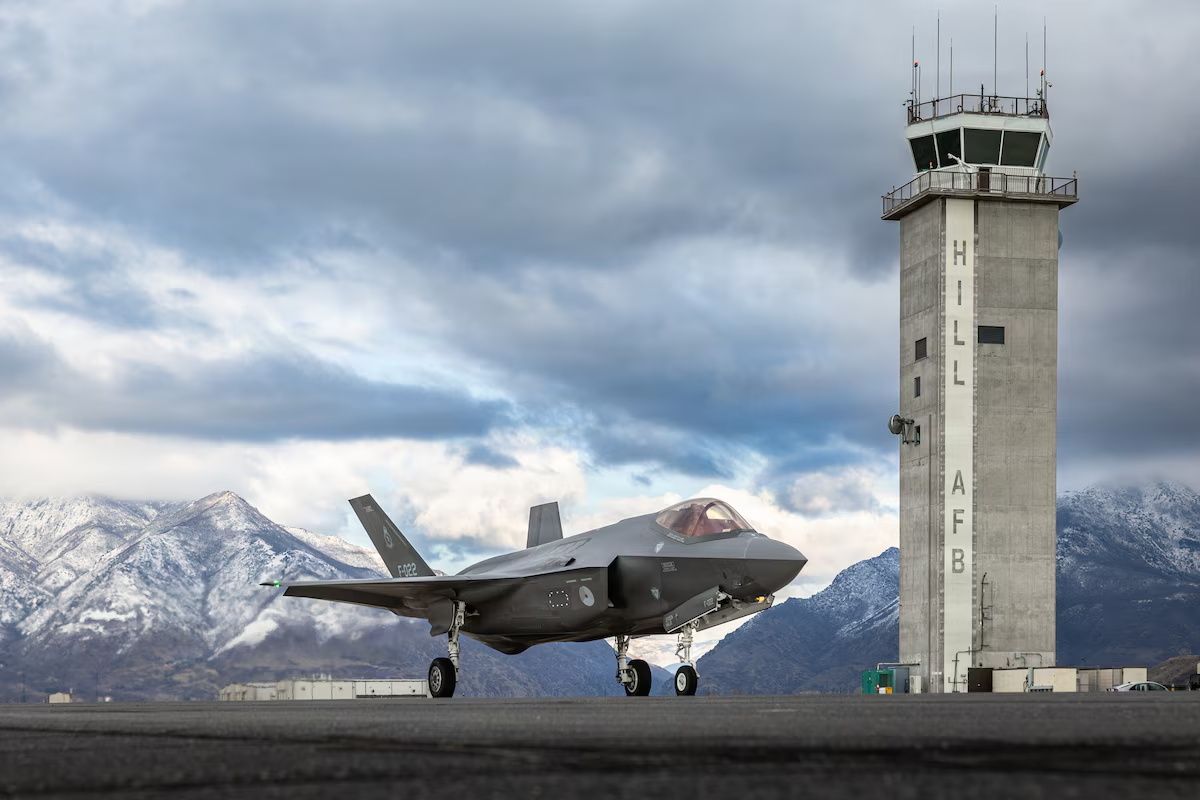
“It is a huge win for the Dutch to come out here,” said Maj. Cody Bown, a 419th Fighter Wing reservist, who is serving as the 388th Operations Group deputy commander. “While it is a big effort for both the 75th Air Base Wing and the 388th to support another unit’s deployment, it has also been a phenomenal help to our Airmen as well, because now our training includes more aircraft, different pilots. We’re getting more realistic scenarios that helps all of the pilots from both the Dutch side and the U.S. side be better prepared.”
This deployment is a crucial experience for the squadron’s less-seasoned pilots. For many, this is their first exposure to an exercise of this scale and intensity. A key element of that training is the Utah Test and Training Range itself. The range’s advanced threat emitters and realistic target sets allow the Dutch pilots to employ the F-35’s full capabilities in ways they cannot back home. While past allied exercises often focused on “synchronizing” operations, where different aircraft would simply operate in the same airspace, the shared F-35 platform allows for true integration. This integration provides significant benefits not just for the visiting Dutch forces, but for the Hill units as well. The presence of the allied jets enhances the scale and realism of training for the 388th Fighter Wing’s own pilots. As the exercise continues, the goal for the Dutch squadron is clear: to return home with the confidence that they can deploy at scale, sustain high-tempo combat operations, and seamlessly integrate with their most critical allies. The support from Team Hill has been instrumental in that mission.