


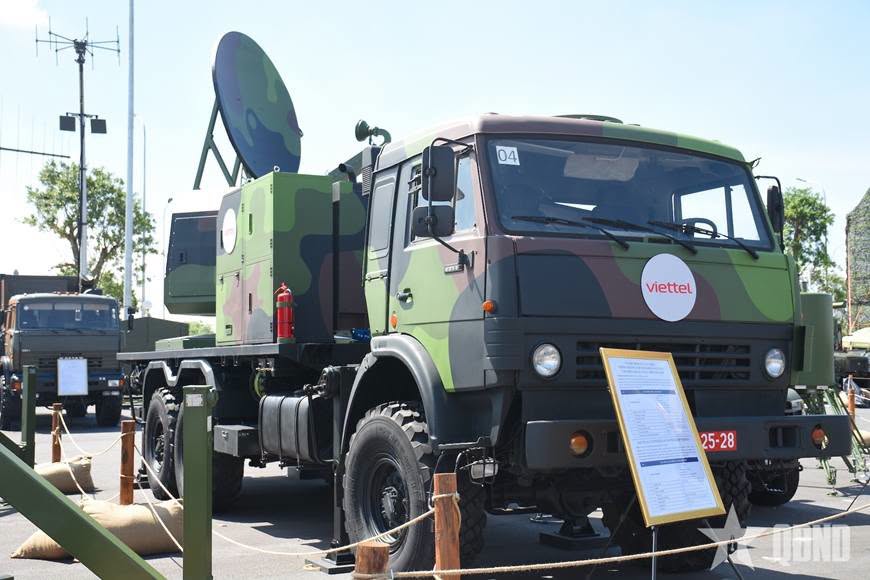
Vietnamese state-owned defence conglomerate Viettel Military Industry and Telecoms Group (Viettel) has unveiled the VCU5, a tactical-level anti-drone platform featuring high-power microwave (HPM) technology designed to disrupt and neutralize unmanned aerial vehicle (UAV) threats. Developed under the direct administration of Vietnam’s Ministry of National Defence, the system combines broad-spectrum radio-frequency (RF) surveillance with targeted directed-energy capabilities. Operating as a unified counter-UAV (C-UAV) solution, the VCU5 provides front-line forces with an indigenous capability to safeguard critical infrastructure and forward operating bases against modern aerial surveillance and strike platforms.
The VCU5 architecture integrates a multi-layered sensor and effector suite within a single tactical package. System functionality encompasses passive RF reconnaissance, target detection, classification, and precise directional localization of hostile UAV signals. Upon identifying an incoming aerial threat, the system can deploy soft-kill electronic countermeasures via multi-band RF jamming or transition directly to hard-kill electronic neutralization. The integrated electro-magnetic pulse (EMP) payload emits high-intensity electromagnetic energy engineered to induce electrical overstress, destroying or rendering inoperable the sensitive microelectronics and onboard control units of target platforms.
Unlike conventional kinetic interceptors that target individual aircraft or standard RF jammers that rely on active operator-to-drone command links, the VCU5’s EMP capability is optimized to counter multi-UAV saturation attacks. By delivering focused electromagnetic bursts across a designated engagement zone, the system can simultaneously disable multiple targets regardless of their guidance systems. This enables the platform to effectively neutralize fully autonomous UAVs operating without active command links or satellite navigation, offering robust area-denial protection against advanced swarm tactics.
The induction of the VCU5 reflects Hanoi’s broader initiative to advance domestic defence-industrial manufacturing through Viettel subsidiaries such as Viettel High Tech and the Viettel Aerospace Institute. By deploying locally developed electronic warfare and directed-energy assets to the Vietnam People’s Army, defence planners aim to bolster air defense coverage and mitigate operational risks posed by low-altitude unmanned systems. The development underscores an emphasis on self-reliance in tactical C-UAV technologies to maintain readiness across potential operational theaters.


