


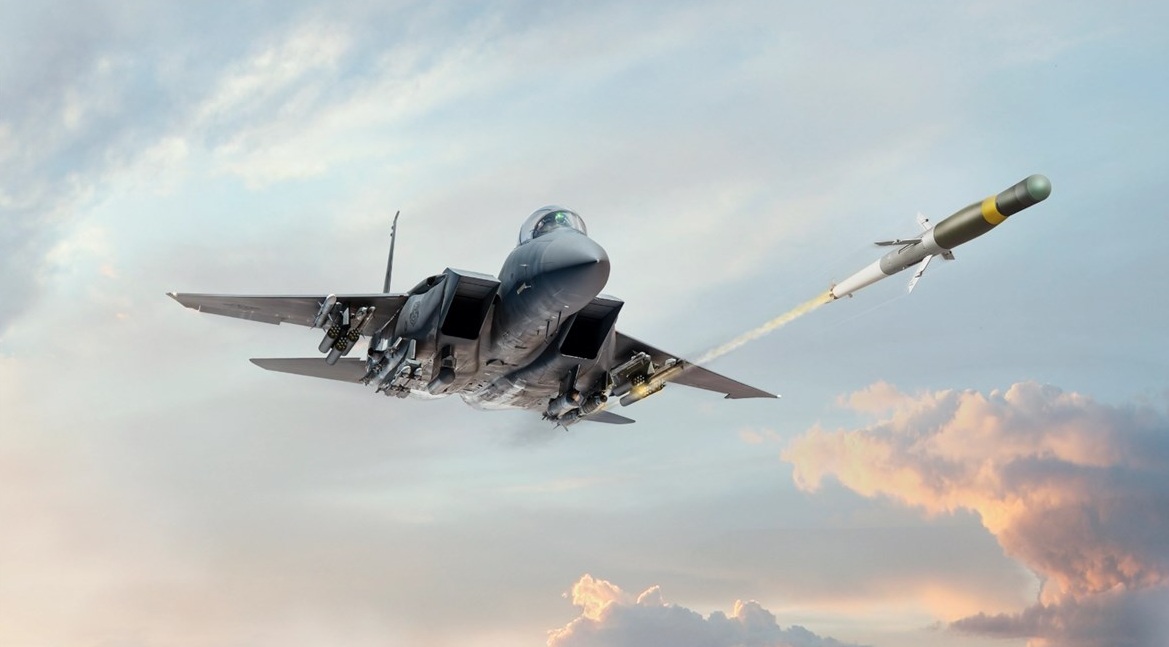
The US Department of State has approved a potential Foreign Military Sale (FMS) to the Government of Italy covering the procurement of Guidance Section Single Variant Air-to-Air Advanced Precision Kill Weapon System-II (APKWS II) kits and associated materiel for an estimated total cost of USD364 million. Under the requested package, Rome seeks to acquire 5,031 WGU-59B/B guidance units alongside LAU-131 A/A launchers, Mk-152 high-explosive warheads, MK66 rocket motors, proximity fuzes, WTU-1/B practice warheads, and inert training motors. The comprehensive package also includes support equipment, technical documentation, transportation, and logistics support provided by contractor and US government engineering teams. BAE Systems, based in Nashua, New Hampshire, has been named prime contractor for the deal, with no offset agreements currently specified, while implementation will require no additional US personnel deployments to Italy or compromise US military force readiness.
Developed to fill a critical operational payload gap between standard unguided 2.75-inch (70 mm) rockets and heavy air-to-ground missiles such as the AGM-114 Hellfire, the APKWS II converts traditional unguided ordnance into highly accurate precision-guided munitions (PGMs). The system is built around BAE Systems’ Distributed Aperture Semi-Active Laser Seeker (DASALS) technology, which mounts optics on the leading edges of four forward-deploying control canards rather than in the missile nosecone. This architectural design allows existing Hydra 70 warheads and fuzes to be retained while integrating the mid-body WGU-59/B guidance section between the warhead and the Mk 66 rocket motor. Compared to legacy PGMs, the resulting weapon operates at roughly one-third the procurement cost and launch weight, delivers a lower explosive yield optimized for collateral damage reduction, and reduces loading times for ordnance crews by three-quarters.
The system’s single-variant software configuration features optimized flight trajectory logic that increases effective range by up to 30% through a steeper angle of attack while standardizing operational deployment across both fixed-wing and rotary-wing aircraft architectures. Incorporating enhanced surface danger zone algorithms for refined live-fire training, the standard APKWS unit achieves effective engagements between 1,100 m and 5,000 m, hitting minimum-range targets within five seconds of launch. Although practical range remains constrained by the baseline Mk 66 rocket motor, the DASALS optical seeker can detect targets out to 14 km, prompting ongoing industry development—such as rocket motor upgrades by Nammo—aimed at extending total operational stand-off distances to between 12 km and 15 km.
According to the US Defense Security Cooperation Agency (DSCA), the proposed transaction will enhance the national security interests of the United States by reinforcing the defense posture of a key NATO ally. The integration of precision air-to-air APKWS II capability will strengthen Italy’s homeland defense, provide a flexible deterrent against regional threats, and bolster protection for local allied ground units. Furthermore, the acquisition is expected to significantly improve Italy’s operational contribution to NATO integrated air and missile defense architecture without disrupting the baseline regional military balance, with the Italian Armed Forces anticipated to seamlessly absorb the new weapon systems into existing service structures.


