


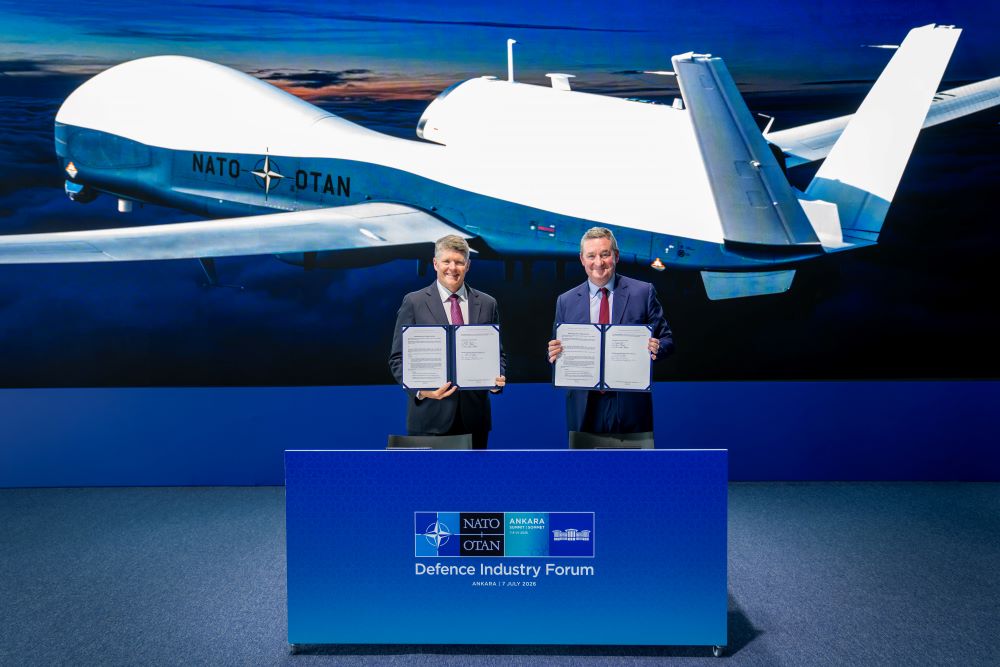
Northrop Grumman Corporation (NYSE: NOC) has signed a Memorandum of Understanding (MOU) with Airbus Defence and Space as a step toward bringing the Triton uncrewed aircraft system to NATO operations. Signed during the NATO Summit Defence Industry Forum, this collaboration will explore a transatlantic solution for the recently announced Letter of Intent to expand the NATO Intelligence, Surveillance and Reconnaissance (ISR) Force with the addition of MQ-4C Triton systems. The strategic industrial MOU covers key cooperation areas between the two companies. In addition to this cooperation, the companies are working with a wider group of European industry to propose a full spectrum of services and enable a more rapid implementation of the capability. Coordination is ongoing with KONGSBERG Defence & Aerospace AS (Norway), Insta Advance Oy (Finland), Terma A/S (Denmark) and Exence S.A. (Poland) to build upon their existing work for the NATO ISR Force.
Jane Bishop, vice president & GM, Global Surveillance, Northrop Grumman: “Our collaboration with Alliance members on the expansion of NATO’s ISR Force will bring the most advanced ISR capabilities to the Alliance, bolstering its regional security and enhancing Europe’s defense industrial base.”
Northrop Grumman will work closely with Airbus to assess their complementary capabilities and opportunities to provide technology and services in support of the airborne platforms (MQ-4C Triton) and related ground systems. These services could include airborne and ground segment communications; data processing; exploitation and dissemination capabilities; and command and control services. Collaboration with Terma, KONGSBERG, Insta, and Exence will foster wider industrial cooperation across the Alliance, building upon existing relationships, leveraging complementary competencies and fostering new opportunities. These industrial partnerships build directly upon the existing cooperation and robust capabilities established over the last decade with the current NATO ISR Force’s RQ-4D Phoenix fleet, thereby leveraging proven expertise and industrial relationships to meet the challenging schedule. This cooperative effort reflects the strong commitment of participating nations and industry collaborators to ensure that the NATO ISR Force retains the modern, reliable and responsive capabilities in support of Alliance operations and decision-making.


