


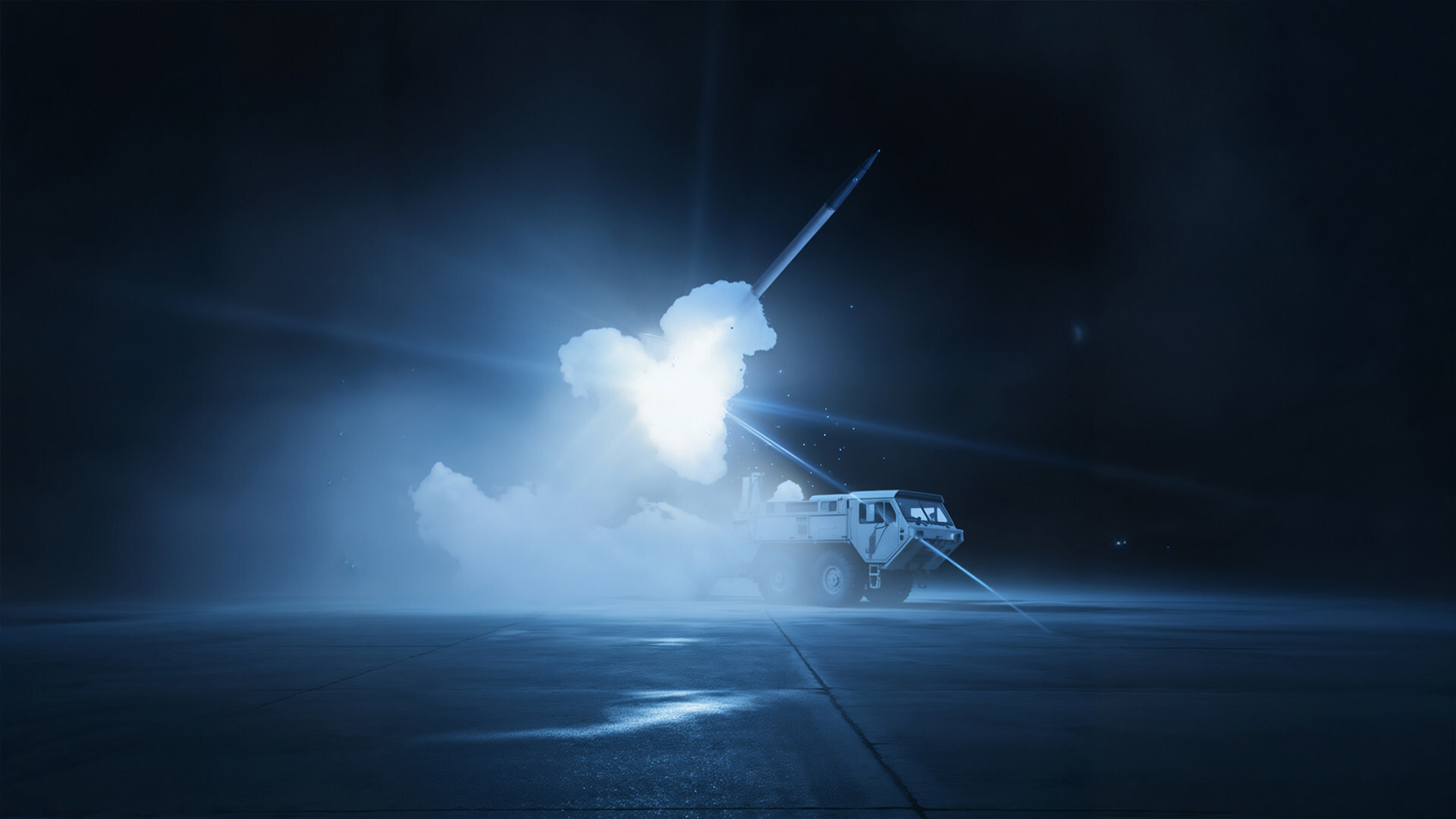
The U.S. government awarded Lockheed Martin (NYSE: LMT) a seven-year undefinitized contract action (UCA) for up to $35 billion to quadruple production of Terminal High Altitude Area Defense (THAAD) interceptors. The award is one of the first major multiyear procurement contracts executed under the Department of War’s Acquisition Transformation Strategy and represents one of the first full-scale transitions from framework agreement to contract execution under the initiative. It demonstrates Lockheed Martin’s commitment to building the Arsenal of Freedom. The contract puts into action the THAAD framework agreement signed in January between the Department of War and Lockheed Martin, providing the long-term demand signal needed to accelerate production capacity, strengthen the defense industrial base and deliver critical missile defense capability at speed and scale for the U.S. and its allies. The award comes weeks after Lockheed Martin broke ground on a new Munitions Production Center in Troy, Alabama, as part of the company’s more than $9 billion investment through 2030. This investment is already delivering tangible results to meet heightened munitions demand, including more than 20 new or modernized facilities across the United States. Lockheed Martin also recently opened the Next Generation Interceptor facility in Courtland, Alabama, and the Munitions Acceleration Center in Camden, Arkansas.
Terminal High Altitude Area Defense (THAAD), formerly Theater High Altitude Area Defense, is an American anti-ballistic missile defense system, deployed since 2008, designed to intercept and destroy short-, medium-, and intermediate-range ballistic missiles in their terminal phase (descent or reentry). The THAAD interceptor carries no warhead, instead relying on its kinetic energy of impact to destroy the incoming missile. THAAD was developed after the experience of Iraq’s Scud missile attacks during the Gulf War in 1991. THAAD has an operational range of 200 km. Each battery consists of six transporter erector launcher trucks with eight launch tubes each, 48 interceptors, one AN/TPY-2 transportable radar, three control stations, and a crew of 90 soldiers. The control stations connect to the US C2BMC communications system, integrating THAAD into a layered air defense architecture alongside the longer-range Ground-Based Interceptor, the similar-range Aegis Ballistic Missile Defense System, and shorter-range MIM-104 Patriot. THAAD is the only U.S. system designed to intercept threats both inside and outside the atmosphere, providing a critical layer of missile defense. Its performance has been demonstrated in operations including Operation Epic Fury, where it continues to defend forces and key infrastructure against evolving threats.

“This award reflects our shared vision with the Department of War to strengthen America’s Arsenal of Freedom through a transformational shift to multiyear procurement,” said Tim Cahill, president, Lockheed Martin Missiles and Fire Control. “This new approach propels our efforts to strengthen the defense industrial base, expand production and deliver capabilities to the American warfighter at unprecedented speed and scale.”
Acquisition Transformation Leadership: Lockheed Martin was the first in the industry to announce a framework agreement for munitions acceleration under the Department of War’s Acquisition Transformation Strategy. Since January, landmark framework agreements have been established to expand production capacity for PAC-3® MSE, the THAAD interceptor and Precision Strike Missile (PrSM). In April, the U.S. government awarded Lockheed Martin a $4.7 billion contract to continue critical accelerated production of PAC-3 MSE this year.
American Job Growth: Lockheed Martin continues to expand its workforce, creating tens of thousands of high-quality American jobs across manufacturing, engineering and skilled trades. These investments ensure America and its allies have the proven capabilities needed to protect people, infrastructure and freedom around the globe.
Supply Chain Resilience: Lockheed Martin is strengthening resilience of our supply chain, deepening collaboration with suppliers and driving innovation across operations. Lockheed Martin is engaging regularly with suppliers critical to scaling munitions production, focusing on building stronger relationships, emphasizing speed and driving solutions to better prepare for current and future threats.


