


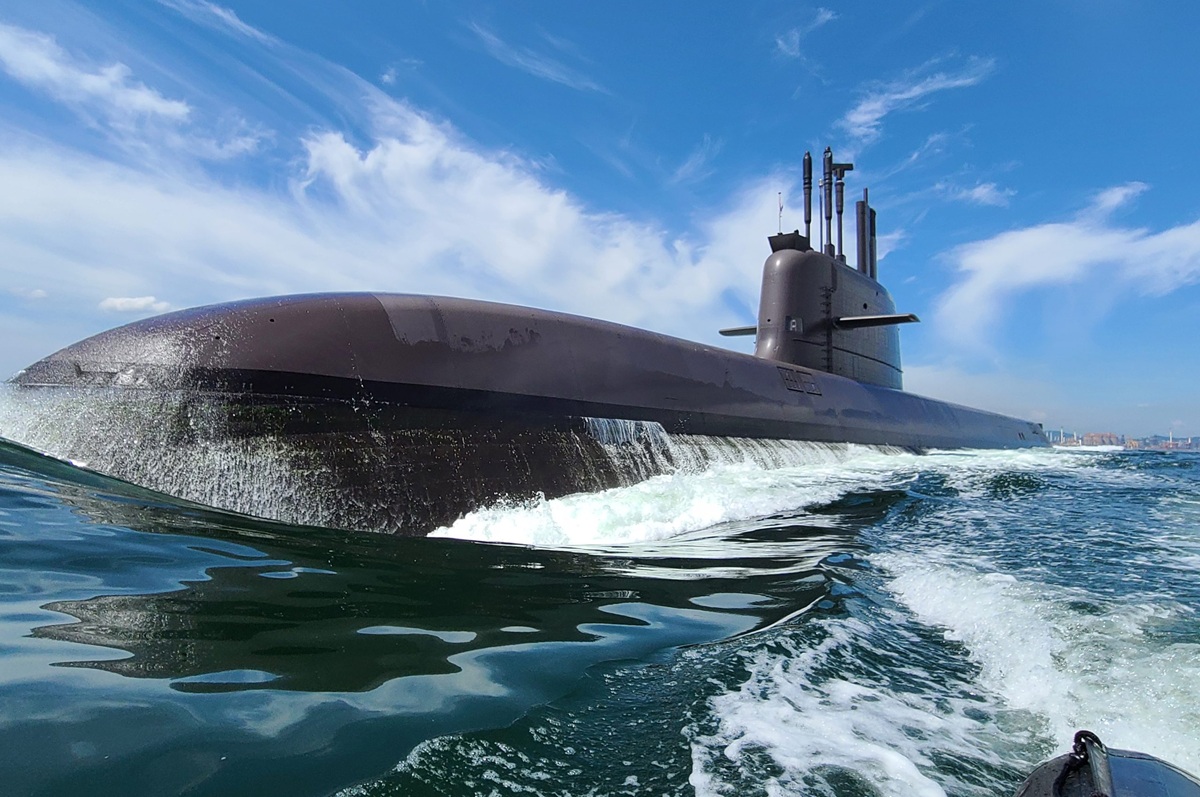
South Korea’s Hanwha has outlined an expansive industrial and capability package for Canada, centred on its KSS-III submarine, as part of Ottawa’s Canadian Patrol Submarine Project (CPSP). The proposal includes the establishment of a Canada-based joint venture with the Automotive Parts Manufacturers’ Association (APMA), contingent on the KSS-III being selected. The venture would deliver full-spectrum production capabilities for heavy military and non-commercial industrial vehicles, targeting both domestic requirements and export markets. Under the proposed structure, the new entity would be majority Canadian-owned, with local executive leadership and governance. Production would be fully localised, utilising Canadian labour, supply chains, and raw materials, including domestically sourced steel and aluminium. The initiative aligns with the Canadian government’s “Build in Canada” policy framework under its Defence Industrial Strategy, with Hanwha and APMA projecting the creation and protection of tens of thousands of jobs across the national automotive and defence sectors.
Hanwha Ocean positions the KSS-III as a mature, in-service platform capable of meeting Canada’s operational requirements, including sustained Arctic deployment. The company states that, if a contract is awarded in 2026, four submarines could be delivered by 2035 to replace the Royal Canadian Navy’s Victoria-class submarine fleet, with the first unit entering service as early as 2032. The remaining eight boats would follow at a rate of one per year, enabling delivery of a 12-strong fleet by 2043. The accelerated timeline is also expected to reduce sustainment costs associated with extending the service life of the Victoria class, with estimated savings of approximately USD1 billion. Beyond submarines, the industrial partnership would extend to licensed production of multiple land systems, including the K9 Thunder, K10 Ammunition Resupply Vehicle, Redback infantry fighting vehicle, and Chunmoo multiple launch rocket system, as well as uncrewed ground platforms. The venture would also support the development of specialised non-commercial vehicles for the Canadian Armed Forces and a range of government and emergency service users, including operations in Arctic and resource-sector environments.

The KSS-III design benefits from an active production line in South Korea, where the Republic of Korea Navy currently operates three Batch-I submarines. Construction of three improved Batch-II units is ongoing, with the first launched in October 2025. Hanwha Ocean argues that this production maturity underpins a low-risk delivery profile, supported by an established supply chain and continuous build programme. From a technical standpoint, the KSS-III incorporates lithium-ion battery technology and a fuel cell-based air-independent propulsion system, providing extended submerged endurance relative to conventional diesel-electric submarines. The platform is configured for a multi-mission profile, including anti-submarine warfare, anti-surface warfare, intelligence, surveillance and reconnaissance, and mine-laying operations. Its open-architecture combat system is designed to support the integration of future payloads and incremental capability upgrades, aligning with Canada’s long-term requirements for adaptable and sovereign undersea capabilities.
Hanwha Ocean Co., Ltd., formerly known as Daewoo Shipbuilding & Marine Engineering, is one of the “Big Three” shipbuilders of South Korea, along with Hyundai and Samsung. In December 2022, Hanwha Group announced that it would acquire a controlling 49.3 percent stake in Daewoo Shipbuilding & Marine Engineering worth 2 trillion won (US$1.5 billion). The deal was supported by the Korea Development Bank in an attempt to improve competition in the Korean shipbuilding industry. Hanwha Ocean, headquartered in Geoje, South Korea, is one of the world’s largest shipbuilders, with over 40 years of experience in naval and commercial programmes. The company operates a major integrated shipyard employing more than 31,000 personnel and has delivered over 1,400 vessels globally, including submarines and surface combatants for the Republic of Korea Navy. In July 2024, Hanwha Ocean became the second Korean shipbuilder after Hyundai Heavy Industries to sign a master ship repair agreement (MSRA) with Naval Supply Systems Command (NAVSUP), qualifying it to participate in the U.S. Navy’s MRO business.


