


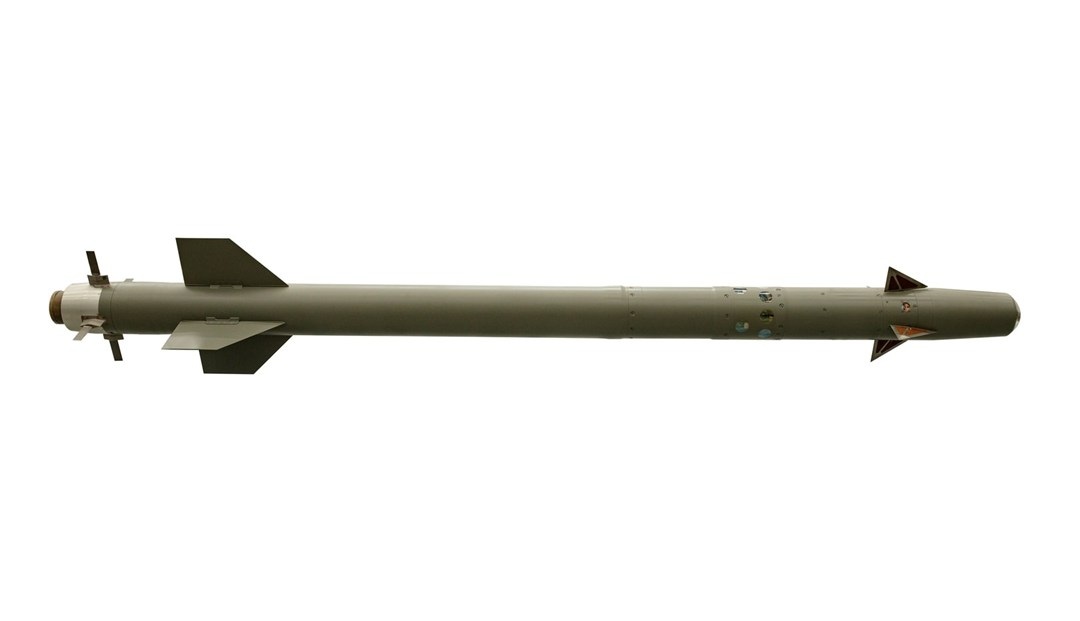
Russia’s Kalashnikov Concern has completed the delivery of a new batch of 9M333 guided anti-aircraft missiles to a state customer, fulfilling part of its 2026 contractual obligations. The shipment underscores continued production momentum amid sustained operational demand, with the missiles designated for use on the Strela-10 family of short-range air defense systems currently fielded by Russian ground forces. The 9M333 missile is designed to engage aerial threats under all-weather, day-and-night conditions, including in environments affected by optical interference. Its multi-mode homing head incorporates photocontrast, infrared, and jam-resistant guidance channels, enabling improved resilience against electronic countermeasures. This configuration enhances the system’s effectiveness against low-altitude targets such as unmanned aerial vehicles (UAVs), cruise missiles, and rotary-wing aircraft operating in contested environments.
According to company statements, increased procurement volumes are linked to favorable combat performance assessments. Kalashnikov Concern highlighted that optimized production planning, expanded assembly capacity, and workforce training programs have contributed to meeting delivery timelines under current demand conditions. The 9K35 Strela-10 (NATO reporting name: SA-13 “Gopher”) remains a highly mobile, short-range air defense platform designed to counter low-altitude aerial threats. The system employs optical and infrared guidance and is typically deployed to protect maneuver units against helicopters and other close-range airborne targets. Originally configured to fire the 9M37 missile, the Strela-10 launch system retains backward compatibility with earlier interceptors, including the 9M31M used by the Strela-1. This interoperability has enabled incremental upgrades without requiring major platform redesigns, supporting extended service life across multiple variants.

Baseline 9M37-series missiles measure approximately 2.2 m in length and weigh around 40 kg, carrying a 3.5 kg warhead. The interceptor achieves speeds approaching Mach 2, with an engagement envelope ranging from 800 m to 5 km and operational altitudes between 10 m and 3,500 m. These parameters define its effectiveness against low-flying targets within the short-range air defense (SHORAD) role. A standard Strela-10 launcher carries four ready-to-fire missiles mounted externally, with an additional eight reloads stored internally. Reload operations can typically be completed within approximately three minutes, supporting sustained engagement capability in high-tempo scenarios. The transition from the 9M37 to the upgraded 9M333 introduced several enhancements, including a heavier expanding-rod warhead with increased high-explosive content, as well as an improved proximity fuze employing an eight-beam laser system. These modifications increase lethality and improve engagement probability against small and fast-moving targets, particularly UAVs and cruise missiles.
In addition, the 9M333 incorporates a triple-channel guidance architecture, significantly improving resistance to countermeasures compared to earlier variants. While all missiles in the Strela family utilize optical homing technologies, the 9M333’s multi-channel seeker provides greater target discrimination and tracking reliability under electronic warfare conditions. All principal variants of the Strela-10—including the SV, M, M2, and M3 configurations—are compatible with the full range of missile types, including the 9M31M, 9M37, 9M37M, and 9M333. This flexibility ensures continued operational relevance as incremental upgrades are integrated into legacy air defense inventories.


